
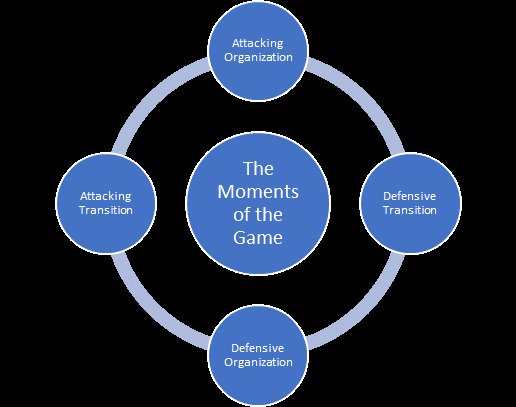
The four moments of soccer are crucial elements that dictate the flow and outcome of a match. They encompass transitions, attack, defense, and set pieces. Understanding and mastering these moments can elevate a team’s performance on the field. Transitions play a pivotal role in swiftly switching from defense to attack or vice versa, catching opponents off guard. The attack phase focuses on creating scoring opportunities and putting pressure on the opposing team’s defense. Equally important is the defensive phase, where teams work together to prevent the opposition from scoring. Lastly, set pieces offer strategic chances to capitalize on well-rehearsed plays.

What Are the Four Moments of Soccer
Welcome, young soccer enthusiasts! If you’ve ever watched a soccer match or played the game yourself, you might have noticed that the action on the field is not continuous. Instead, the game is divided into distinct phases known as the “four moments of soccer.” Understanding these moments is crucial for players, coaches, and fans alike to appreciate the beauty and strategy behind the world’s most popular sport.
The Four Moments Explained
So, what exactly are these four moments of soccer? Let’s break them down:
1. Offensive Moment
The offensive moment occurs when a team has possession of the ball and is actively trying to score a goal. This is when players work together to move the ball towards the opponent’s goal, creating scoring opportunities through passing, dribbling, and shooting. The offensive moment is all about creativity, skill, and teamwork as players try to outmaneuver the defense and find a way to put the ball into the back of the net.
2. Transition from Offense to Defense
After an offensive play, there is a transition moment where the team that just lost possession of the ball must quickly switch from attacking to defending. This transition is crucial because the team is most vulnerable to counterattacks during this period. Players need to react swiftly, regroup into a defensive shape, and try to win the ball back before the opponent can capitalize on the sudden change in possession.
3. Defensive Moment
When a team is not in possession of the ball, they enter the defensive moment. This is when players focus on preventing the opposing team from scoring by disrupting their attacks, intercepting passes, and closing down spaces. Defending requires discipline, communication, and tactical awareness to maintain a solid defensive structure and deny the opponent any clear scoring chances.
4. Transition from Defense to Offense
Just like the transition from offense to defense, the transition from defense to offense is a critical moment in soccer. When a team wins back possession of the ball, they must quickly switch gears and transition into attack mode. This transition phase offers a great opportunity to catch the opponent off guard as they readjust their defensive shape. Players need to be alert, make smart decisions, and capitalize on the momentum shift to launch their own attacking plays.
The Importance of Understanding the Four Moments
Now that you know what the four moments of soccer are, why are they so important? Well, mastering these moments is essential for both individual players and teams to succeed on the pitch. Here’s why:
1. Team Coordination
By understanding the four moments, players can better coordinate their actions on the field. Whether it’s knowing when to press high during the offensive moment or quickly regrouping in defense during a transition phase, teamwork and communication are crucial for a team to function effectively.
2. Tactical Awareness
Recognizing the different moments helps players develop a deeper understanding of the game’s tactics and strategies. Coaches often analyze these moments to devise game plans and make tactical adjustments based on how the game is unfolding. Players who are tactically aware can adapt to changing situations and make informed decisions on the field.
3. Game Management
Effective game management involves knowing when to control the pace of the game, when to press forward, and when to sit back and defend. Understanding the four moments allows players and coaches to manage the ebb and flow of a match, seize momentum shifts, and capitalize on the opponent’s weaknesses.
So, there you have it – the four moments of soccer explained! Next time you watch a soccer match, pay attention to how teams transition between these moments and how players contribute to each phase of the game. By understanding and mastering the four moments, you’ll have a deeper appreciation for the beauty and complexity of the world’s most beloved sport. Keep practicing, stay passionate, and enjoy the beautiful game of soccer!
Thank you for reading, young soccer enthusiasts!
The Four Moments in Soccer
Frequently Asked Questions
What do the four moments of soccer refer to?
The four moments of soccer are the different phases or situations that occur during a match that players must be aware of and adapt to. These moments include defensive organization, defensive transition, offensive organization, and offensive transition.
How does understanding the four moments of soccer help players on the field?
Understanding the four moments of soccer allows players to make quick decisions and perform effectively in different game situations. It helps players anticipate transitions, maintain defensive shape, create scoring opportunities, and effectively counter opponents’ attacks.
Can you explain defensive organization in the context of the four moments of soccer?
Defensive organization refers to how a team sets up defensively when they do not have possession of the ball. It involves players positioning themselves well on the field, marking opponents, and staying compact to limit the opposition’s space and passing options.
What is offensive transition in the four moments of soccer?
Offensive transition is the phase when a team quickly shifts from defense to attack after regaining possession of the ball. This moment is crucial as it allows the team to catch the opponents off guard, exploit open spaces, and create goal-scoring opportunities.
Final Thoughts
Understanding the four moments of soccer – transition, attack, defense, and set pieces – is crucial for players and coaches. Transition moments occur when possession changes, demanding quick tactical adjustments. Attack moments involve offensive strategies to score, requiring teamwork and creativity. Defense is about regaining possession and preventing goals, emphasizing organization and communication. Set pieces are key opportunities for scoring, demanding precision and strategic planning. Mastering these four moments is essential for success on the soccer field.