
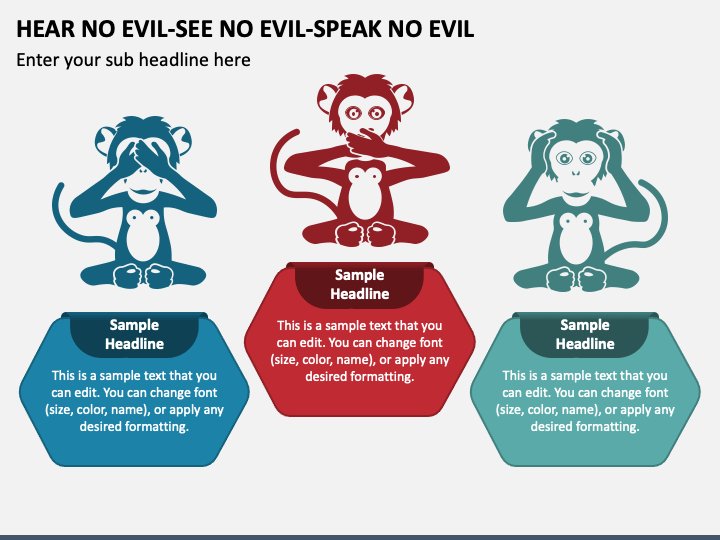
Hear no evil, see no evil – a phrase that resonates with a profound message. It signifies a concept rooted in the principle of avoiding exposure to negativity. This age-old adage encourages one to refrain from engaging in or acknowledging any form of wrongdoing or immorality. The idea is to maintain a sense of purity and innocence by consciously choosing not to hear or see evil in the world. In this blog article, we delve into the depths of what does hear no evil see no evil mean, and uncover its significance in today’s society.

What Does “Hear No Evil, See No Evil” Mean: Exploring the Famous Saying
Welcome, curious minds! Have you ever heard the phrase “hear no evil, see no evil”? It’s a famous saying that has been around for a long time. But what does it really mean? In this blog post, we are going to explore the depth and meaning behind this well-known expression. So, sit back, relax, and let’s dive into the world of “hear no evil, see no evil” together!
Understanding the Origins of the Saying
Before we delve into the meaning of “hear no evil, see no evil,” let’s take a quick journey back in time to understand its origins. This saying actually comes from a famous Japanese proverb, “Mizaru, Kikazaru, Iwazaru,” which translates to “See no evil, hear no evil, speak no evil.” This proverb is often depicted with three wise monkeys: one covering its eyes, another covering its ears, and the third covering its mouth.
The idea behind this proverb is to promote good conduct and moral values. By choosing not to see, hear, or speak evil, one can lead a virtuous and peaceful life. It encourages people to avoid engaging in or being influenced by negative behaviors or thoughts.
Breaking Down the Components: Hear No Evil, See No Evil
Now that we know the roots of the saying, let’s focus on the two components that we are exploring today: “hear no evil” and “see no evil.”
Hear No Evil
Imagine a world where you only hear kind words, positive stories, and uplifting messages. That’s the essence of “hear no evil.” It’s about surrounding yourself with positivity and choosing to ignore gossip, negativity, or harmful words. By turning a deaf ear to negativity, you protect your mind and spirit from being tainted by harmful influences.
Think of a time when someone said something hurtful to you. How did it make you feel? Now, envision if you had the power to block out those hurtful words and only listen to words of encouragement and love. That’s the power of “hear no evil.”
See No Evil
When it comes to “see no evil,” it’s all about what you choose to focus on with your eyes. Just like hearing no evil, seeing no evil means turning a blind eye to negative imagery, harmful actions, or anything that may disturb your peace of mind. It’s about consciously directing your attention toward things that bring joy, inspiration, and kindness.
Imagine scrolling through social media and coming across a post that spreads hate or violence. Instead of dwelling on it, you choose to scroll past and focus on content that promotes positivity and unity. That’s practicing “see no evil.”
Applying “Hear No Evil, See No Evil” in Everyday Life
Now that we’ve dissected the meanings of “hear no evil” and “see no evil,” let’s talk about how we can apply these principles in our daily lives. These timeless concepts can help us navigate through challenging situations and maintain a sense of inner peace and well-being.
Creating a Positive Environment
One way to incorporate “hear no evil, see no evil” into your life is by curating a positive environment. Surround yourself with people who uplift you, engage in activities that bring you joy, and consume media that inspires and educates you. By consciously choosing positivity, you can cultivate a nurturing space for your mind and soul.
Practicing Mindfulness
Mindfulness is all about being present in the moment and observing your thoughts and feelings without judgment. By practicing mindfulness, you can become more aware of the information you consume, whether it’s through conversations, news, or social media. Take a moment to pause and reflect before engaging with content that may have a negative impact on your well-being.
Choosing Empathy and Understanding
Empathy is the ability to understand and share the feelings of others. When faced with challenging situations or conflicts, practice empathy by listening without judgment and seeking to understand different perspectives. By choosing empathy over judgment, you can foster harmony and compassion in your interactions with others.
Conclusion: Embracing the Wisdom of “Hear No Evil, See No Evil”
As we conclude our exploration of “hear no evil, see no evil,” it’s clear that this timeless saying holds valuable lessons for us all. By actively choosing to filter out negativity and focus on positivity, we can create a more peaceful and harmonious world within and around us. Remember, the power to shape your reality lies in your hands. So, embrace the wisdom of “hear no evil, see no evil,” and let your actions reflect the goodness and light you wish to see in the world.
Thank you for joining us on this enlightening journey. May you carry the essence of “hear no evil, see no evil” with you as you navigate life’s ups and downs. Stay curious, stay kind, and always choose to see the beauty in the world around you!
The Three Wise Monkeys and Its Paradoxical Symbolism | SymbolSage
Frequently Asked Questions
What is the meaning of “hear no evil, see no evil”?
The phrase “hear no evil, see no evil” comes from the proverbial principle associated with the three wise monkeys. It implies avoiding involvement with negative actions, thoughts, or words. Simply put, it suggests not acknowledging or participating in immoral or harmful behaviors.
How does the concept of “hear no evil, see no evil” apply in daily life?
In daily life, following the principle of “hear no evil, see no evil” means consciously avoiding exposure to negative influences. It encourages individuals to focus on positive aspects, refrain from engaging in gossip or immoral activities, and maintain a sense of moral integrity.
What are the potential benefits of practicing “hear no evil, see no evil”?
By adhering to the principle of “hear no evil, see no evil,” individuals can cultivate a more peaceful and positive mindset. This practice can lead to improved mental well-being, reduced stress levels, and enhanced interpersonal relationships based on trust and respect.
Final Thoughts
“Overall, the proverb ‘hear no evil, see no evil’ emphasizes the importance of avoiding exposure to negativity or immorality. By turning a blind eye and deaf ear to harmful influences, one can maintain a sense of innocence and purity. This simple yet powerful message encourages mindfulness and discretion in our daily lives. Remember, what we choose to ignore can have a significant impact on our thoughts and actions.”